Herbal Health; History and Interesting Facts

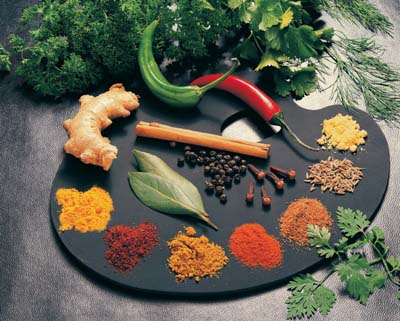
72Nature's Palette of Herbs
Herbal health and remedies have been around since primitive man first wandered the earth. Humankind had to observe nature closely to learn how to survive and take care of their basic needs, health being a basic need. They observed animals to see what plants they ate and watched their behavior. They would have had to learn by trial and error what plants they could eat to cure a stomachache, which plants could be used to heal a cut or burn and which plants to avoid. We now reach in our cupboards and open a bottle to take a vitamin or herbal supplement whereas early man had to hunt and gather and experiment to figure out what worked.
In the past almost all medicines were herbs. The very common little white tablet we now know as aspirin has as its main ingredient, acetylsalicylic acid, which is derived from the bark of a willow tree. Oral decongestants that don't make you sleepy contain pseudoephedrine, which is made from the ephedra plant. At least one-fourth of the prescription drugs prescribed by doctors contain active ingredients derived or synthesized from herbal plants, says Norman R. Farnsworth, Ph.D, Director of the Center for Botanical Dietary Supplements Research, University of Illinois, Chicago College of Pharmacy.
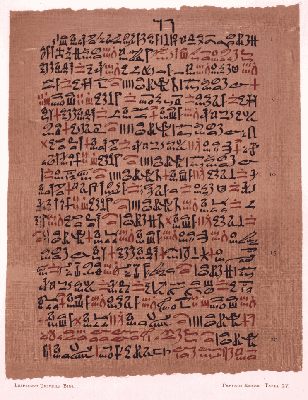
Papyrus Ebers
Interesting Fact
1804- a German apprentice pharmacist, Friedrich Sertuner, isolated an active element of the opium plant, a chemical alkaloid which he called 'morphine'. In 1817, it was marketed as an analgesic. It is now considered the 'gold standard' of analgesics in clinical medicine to relieve severe or agonizing pain.
History of Herbal Medicine
The primitive discoveries were eventually systematized in ancient Rome, Greece, Egypt and China. Different cultures would catalog and preserve their knowledge of herbal remedies. In ancient Egypt, the Papyrus Ebers was written around 1550 B.C., and is one of the two oldest, medical, preserved documents. It is 110 pages (scrolls) written about ancient Egyptian medicine. It lists aloe vera as a remedy for cuts and burns. It lists mint as an aid to digestion and soothes flatulence. Did you ever wonder why they have dinner mints? Basil is listed as excellent for the heart.
Herbal remedies continued for centuries. Modern science and chemistry introduced the ability for scientists and doctors to isolate the active ingredients from herbs and produce a faster-acting medicine. Late 19th century, herbal remedies were considered old fashioned. While dosages of medicine were standardized with synthesized drugs, herbal medicine required guesswork for dosage administration.
Some practitioners continued to administer herbal remedies, homeopaths, osteopaths, chiropractors, hydratherapists as well as a group who combined European herbal traditions with Native American tradition.
Now in the 21st century, with the rising costs of healthcare, the $39 billion Complementary & Alternative Medicine Industry and the $1.9 million practitioner supplements market are attracting more and more consumers. They are seeking traditional Chinese medicine, acupuncture, massage therapy, ayurveda, naturopathy, as well as those listed above according to the Nutrition Business Journal.
How To Grow An Herb Garden Indoors
Interesting Fact
Herbs are very adaptable. As a general rule, an herb garden requires less attention than a vegetable garden. Most herbs thrive in the sun, with six to eight hours of exposure being the ideal.
Back to Nature?
Why do people gravitate towards herbal medicine?
- self-care and disease prevention are a major factor in choosing herbal remedies
- back to nature philosophy about life in general, choosing to find the simple cures that have been known to man for centuries
- rising health care costs that often steer people towards herbs
- used in replacement of potent prescription drugs to reduce their powerful side effects
Rosemary Gladstar, herbalist and author of Herbal Healing for Women states that, "unlike antibiotics, herbs can be used to treat infections, both viral and bacterial." As with any health related issue, a doctor should be consulted before considering herbal remedies in place of any medicine that has been prescribed. On every office visit, my doctor updates any medication I'm taking (thankfully, none), as well as all vitamins and herbal supplements. It's very important that it is documented on a patients records in order to discover any possible interactions that could occur. If your doctor doesn't do this, ask why, because it should be updated each time you have an office visit. If ever in doubt about an herb you may want to try, consult your doctor first!
Do you use or have you ever used an herbal supplement?
See results without votingEducate Yourself and Always Consult a Professional First
Herbal remedies have been around for centuries and will continue to be popular as our world progresses in technology and scientific discovery. We are first and foremost responsible for our own health. There has been recent research done in conjunction with heart disease patients and certain herbs. According to the Mayo Clinic in an article dated Feb. 1, 2010, there are three popular herbs that can be dangerous while taking heart medication drugs.
- St. Johns Wort (taken for depression, anxiety) reduces the effectiveness of medications.
- Ginkgo Biloba (taken to sharpen memory, increase circulation) increases bleeding risk in those taking wayfarin or aspirin
- Garlic (taken to boost immune system and lower cholestorol) can increase bleeding with those taking wayfarin
Always consult with a physician first, as our primary goal with supplements and herbal remedies is to increase our health and well being. I hope this article has been of help to you, the reader, and helps to bring more awareness concerning the use of herbal remedies.
Thank You For Reading and Please Feel Free to Leave a Comment.Loading...
Excellent Hub rE and so well presented. I've often thought about those "trial and error" days with wonderment as well. I'm a big fan of herbal teas and of course other natural remedies. It's interesting to note that one can have an adverse reaction to some herbs even those not traditionally on the "alert" list, so you are wise to advise proceeding with caution.
Hope to see you in the HubMob later this week:)
Love the herbal treatments! I think they treat the whole person as well as what is bothering you. These facts were very interesting. It should come as no suprise to us that the a lot of the medicines made today, actually have components of herbs built right in them.
Great Hub, RebekahElle, it is always nice to read about history of "herbal medicine". Thumbs up.
Clearly and succinctly written. Herbals can be of great benefit for some chronic illnesses. I would like to see many more studies on the effectiveness of many herbs. That way we could spend our money on those that work, and not spend it on those that don't. On the other hand, studies themselves tend to change over time (eggs are good, no they're bad, no wait, they're good again!). There are so many substances out there just waiting to be discovered, which is why it's critical that we preserve regions like the Amazon. Cures for any number of diseases may be out there.
Nicely done. I'm glad you mention some of the dangers, too. St. John's Wort has a whole host of dangers, especially for people already taking serotonin specific reuptake inhibitors (SSRI's). It's amazing how many people don't realize the dangers of some of these non-regulated herbs. Great information. I hope you're well!
Hi wordscribe41
The danger is not really in the Hypericum (St. John's Wort) but in the ssri's (Selective serotonin reuptake inhibitors), which are in themselves dangerous. You are straight on that they are not to be mixed. However, most people who need serotonin will become even more deficient while taking ssri's. My physician husband and I work a lot with neurotransmitters. SSRIs, if used properly,which often they are not, can relieve symptoms of depression by blocking the re absorption (reuptake) of serotonin. This leaves more serotonin available in the brain. However, because it does not address the "cause", which makes the original deficiency worse, much like an addiction or dependency. If anything "mimics" a neurotransmitter, the mechanism that makes it slows down production even more, because it is "fooled" by the imposter. The brain then makes receptors for the ssri's, which is why it is most difficult to get off them. Few of our patients are sever enough to need them. We put them on "brain food" and naturally re-build their serotonin production, usually with 5htp (hydroxy tryptophan), which breaks the brain/blood barrier and is converted by the brain to serotonin. Of course they also take the basic nutrients that re-build a healthy brain.
No one on ssri's should EVER try to stop them on their own. They should seek the advise of a knowledgeable physician who will slowly wean them.
It's a VERY interesting field. Maybe I'll write a hub on it! I'll stop rambling now.
Ciao
Hi Dr. Cherie, very true. I'm an LCSW and have a lot of experience in the mental health field. Hypericum is a problem for Bipolar patients as it can induce mania. So, it even has some issues as a solo use treatment.
http://www.ncbi.nlm.nih.gov/pubmed/10624554
It is a very interesting field. Do write a hub about it. Nice to meet you, by the way. Sorry Rebekah... I feel like I'm hijacking your hub now.
An interesting and well written hub. The only problem I have every had with using herbs is trying to consult a physician with an open mind. As even today in this day and age they are a rare find.
You've done an awesome job on this hub, very informative from start to finish.
Sage
Hi Ms. Rebekahelle, great hub and new refreshing information I never knew before! I like the history which you have included here, Maita
Rebekah, you have written well and researched well, two things that make for interesting reading. And the information is important. I think the awareness of what we are taking is paramount - never take anything you are unsure of or don't know about. And always ask someone who knows first, when you are unsure. As Dr Cherie says, St John's Wort can be dangerous for some people.
It's ironic but some things we might imagine to be gentler than "conventional" medicines can actually be more harmful if taken without awareness or knowledge. Self-medication can be good, but can also be disastrous.
Love and peace
Tony
This is a very informative hub I think may people forget that just because something is ‘natural’ or ‘just a vitamin’ it does not mean that it will not affect you adversely of used wrong or taken in the wrong combinations.
Wow this is really something undiscovered
thanks
Rebekah, I am really enjoying reading your wide range of hubs. I am afairly slow typist so often fail to leave comments. But will always tro to at least vote up.
Thank you very much for the very informative post.
As I always say to my readers herbal teas/herbal medicine have been used for hundred’s of centuries by people around the world and have claimed to prevent or cure diseases, however, human beings are not the same as they were 100 years ago they lived entirely different lifestyles than those of today. Therefore, for modern day human beings it is very difficult to ascertain if these herbal treatments will in effect treat, cure or prevent any disease in any person today as they did for hundred’s of centuries. I always say if you like the taste then by all means drink it, if it makes you feel better drink it. However, don't drink too much because like anything including food too much can make you sick or even kill you. ;)
Great hub Rebekah :-) There is so much to be said for natural plants as medicine, for instance the way that by each crop of stinging nettles you will find close by a crop of dock leaves, the natural way to relieve the stinging. ?t seems to me that human beings were created and alongside them were all the natural medicines to keep them healthy and functioning properly. Anyone with elderly relatives will no doubt have heard many 'old wives' tales. My grandad always had a remedy for everything and I have to say, they all seemed to work. Hmmmm perhaps I w?ll hub them :-)
Herbal medicines really have less side effects than chemical based meds. This is the main reason why more and mroe people are leaning towards that option. But of course herbs need to also be taken in precaution, because there is no telling if we are allergic to the herbs we are taking. So seeking the advice of a physician is still a good option. All the same, some herbs are not only great for their healing properties but also for their tasty qualities, garlic for example helps in digestions and adds the best flavor to almost every dish, there's thyme, basil, oregano, and the list goes on....


Pamela99 Level 7 Commenter 2 years ago
Interesting history of herbs. Nice hub.